he Swedish flag is still flying above the pale blue building overlooking the Atlantic in Liberia's capital, Monrovia, but the doors of the embassy are now closed to visitors. On 31 August, the Swedish embassy in Liberia ends a presence in the country that dates back to 1961.
The billions of kronor of aid that Sweden pipes into the west African country will end on the same day, as sweeping cuts to Swedish development funding come into effect.
In Monrovia, the flag will not be lowered until 31 October, when diplomatic and support staff complete winding down operations, but Liberians involved in the projects dependent on Swedish support are already grappling with an uncertain future.
Since it established a development partnership in 2008 in the aftermath of Liberia's civil war, Sweden has donated more than SEK5.77bn (£445m) in aid, supporting infrastructure, democratic institutions, humanitarian projects, resource management and more. It was an influential supporter of the country's postwar recovery and the 2014-2016 Ebola crisis response, becoming Liberia's second-largest donor, after the US, and the biggest champion of gender equality and sexual and reproductive health and rights (SRHR). In 2025, more than a quarter of its aid went towards women's rights, family planning, HIV care and programmes to end discrimination against women and gender-based violence.
The Swedish government says it will continue to contribute via the EU and multilateral organisations, such as UN women and the UN population fund (UNFPA). But, coming on the heels of the dismantling of USAID, which has left Liberia's clinics without contraceptives, the withdrawal of such a significant backer is a hammer blow.
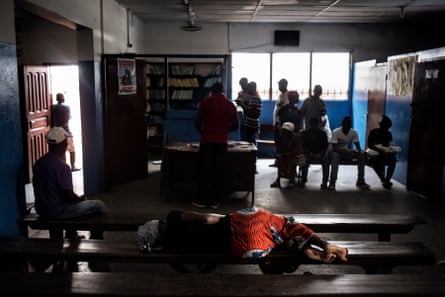
"Imagine the challenges we faced when this funding was available – imagine what it will be like now. It is going to affect those who were already struggling to access family planning and SRHR services," says Naomi Tulay-Solanke of the Amplifying Rights Network (ARN), a coalition of 10 Liberian organisations that has done much to address the challenges preventing women and girls from accessing family planning and understanding their rights. Funded by Swedish aid, ARN has a bridging grant for the next 18 months but after that, survival is uncertain.
Others have felt the effect of cuts immediately. The Promotion of Women's Power and Rights in Liberia (Power) project, one of the most impactful women's rights initiatives in the country, will not have its funding renewed, according to Korto Williams, country director of Swedish NGO Kvinna till Kvinna, which ran Power. Funded by the Swedish development agency, Sida, Power worked on strengthening women's political and economic participation. It also supported programmes to end violence against women, and SRHR services. In the past five years it has reached 16,350 women in nine counties, and helped more than 400 survivors of gender-based violence find justice.
"We will look at the possibility of supporting some local partners [we work with] but really it's challenging without high-value multi-year funding. If you are investing in gender-based violence, that is not something that can wait," says Williams.
Aminata Kamara who runs the Swedish Association of Sexuality Education (RSFU) in Liberia says it is not just the loss of aid and technical support that will be felt by rights groups, but the loss of a key ally in the fight for women and girls' and LGBTQ rights. "Sweden was one of the only partners willing to publicly speak on the most controversial issues such as the right to choose, the right to bodily autonomy. They spoke truth to power and stood with activists," she says.
Liberia is one of the world's poorest countries. Civil wars from 1989-1997 and 1999-2003 left approximately 250,000 people dead, and sexual violence was prolific. Most victims never received justice or compensation.
Rights advocates say the impunity that allowed rape as a weapon of war continues to permeate Liberian society. Sexual assault is widespread – and few perpetrators are held accountable. This, combined with limited access to family planning services, lack of sex education, and poverty, accounts for rising rates of unplanned pregnancy. One study estimated that 46% of pregnancies in Liberia were unwanted. About a third of these end in abortion.
Abortion is severely restricted in Liberia. It is allowed in cases of rape or incest, to save the woman's life, to protect her physical or mental health or if the foetus has severe defects. The reality is that even in these circumstances it can be impossible for a woman to meet the requirements, such as sign off from two doctors, to secure legal abortion. A recent tightening of regulations governing the sale of misoprostol, a drug used to induce a medical abortion, has come as a result of the $176 bilateral aid deal agreed with the US in December 2025, activists believe.
An estimated 38,000 illegal abortions occur each year in Liberia, which account for 10 to 15% of maternal deaths. That figure is likely to be an underestimate, says Tulay-Solanke, as abortion-related fatalities are often attributed to other causes such as haemorrhaging.
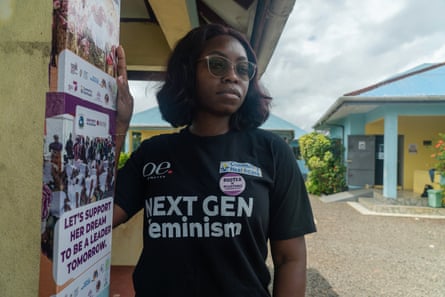
Tulay-Solanke has witnessed the devastating effects of unsafe abortions at the Community Health Initiative (CHI) clinic she runs in Marshall, Margibi, about 34 miles south of Monrovia. The facility sees up to 100 women and girls a day. Most come for family planning, antenatal care, HIV treatment and other sexual and reproductive health issues – but every month at least 10 arrive with complications from illegal abortions, she says. Often they are under 18 and from poor rural communities. "They live with a boyfriend for economic reasons. They don't have the power to say 'use a condom'," she says.
Tulay-Solanke has not, to date, lost any of these patients, but has heard plenty of stories of those who have died after desperate methods to end their pregnancies, including mixing crushed glass with the root of the snake plant – a species widely used in traditional medicine – to form a solid stick that is inserted into the vagina.
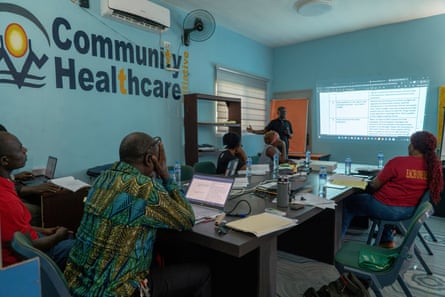
Tulay-Solanke and her fellow advocates are ardent champions of Liberia's proposed public health bill. The legislation would address multiple health issues from pandemic preparedness to vaccines and nutrition – and the legalisation of abortion up to 18 weeks. "Our advocacy is that abortion is healthcare because women are dying," she says.
Another key aspect of the bill is its support of comprehensive sex education (CSE), which activists say is fundamental to improving young lives.
In June, ARN invited hundreds of young people to attend a two-day jamboree in Monrovia. There was music, food, dancing in the rain and rallying speeches about human rights. It was a show of defiance against the messaging at the Strengthening Families conference being held over the same two days at the nearby ministerial complex. This gathering, organised by the Church of Latter-day Saints (the Mormon church), focused on the sanctity of what it regards as the "family unit" – which activists say is a smokescreen for opposition to abortion, LGBTQ rights and sex education.
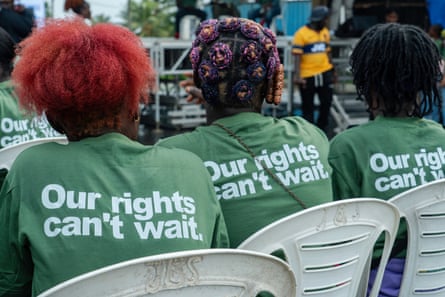
Fearing the event could add to pressure to remove the abortion and CSE clauses from the health bill, ARN spent months ahead of the conference raising awareness of the risk such events pose, holding press briefings, meetings with interfaith leaders to secure their opposition to the conference, and training human rights observers. Earlier this month, ARN was a signatory to a statement expressing outrage at a speech at the Strengthening Families conference given by Greg Slater, co-founder of Family Watch International, an Arizona-based Mormon lobby group, claiming that CSE does not reduce teenage pregnancy rates. Such assertions, the statement says, are "dangerous fabrications designed to dismantle the very educational frameworks that safeguard our children from exploitation, abuse and ignorance".
Such work is directly threatened by Sweden's withdrawal. In a statement the government said: "Sweden is proud to have contributed to progress made when it comes to advancing gender equality in Liberia. Sweden has been a committed partner in advancing gender equality and SRHR and has consistently mainstreamed gender throughout its development cooperation portfolio. As of 2023, 78% of Sweden's contributions in Liberia had at least one gender-responsive target."
But, it added, in reference to money being switched to Ukraine: "In order to meet the greatest security challenge of our time, difficult decisions had to be made."