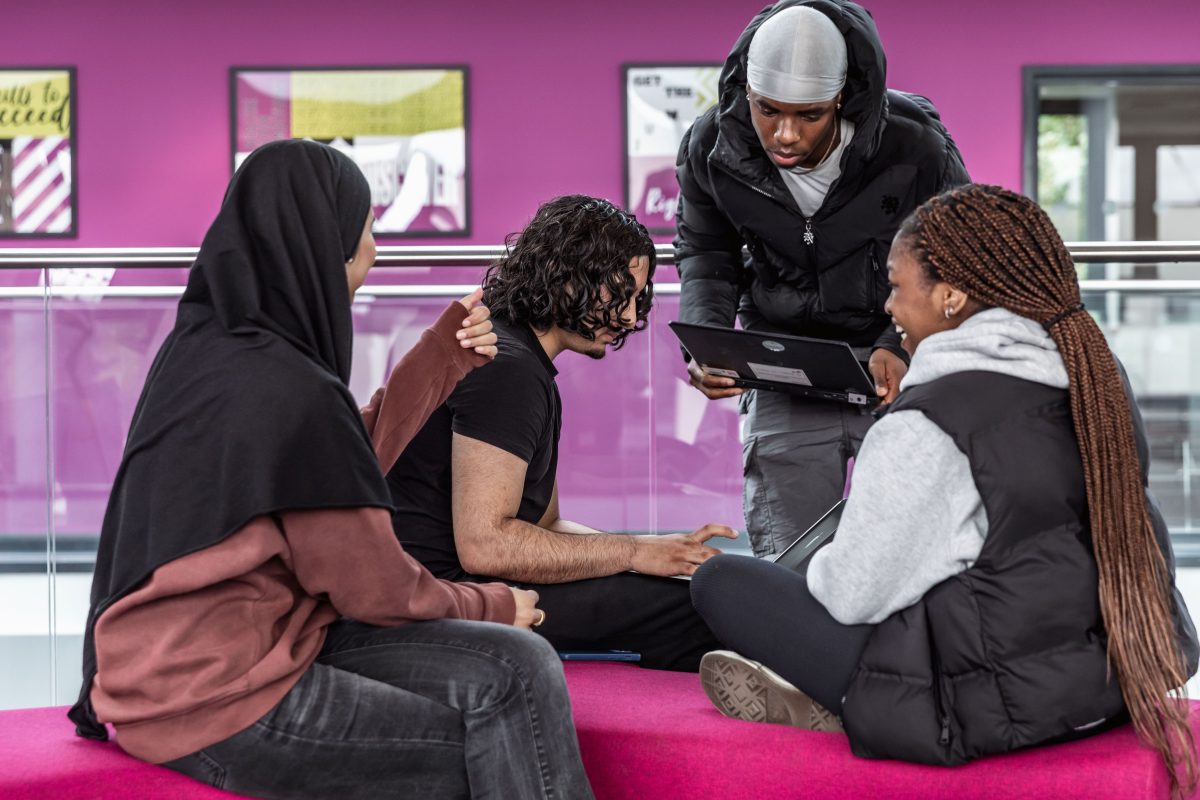
A Hertfordshire college is helping young people develop the confidence to speak up, challenge different viewpoints and resolve disagreements before they escalate through an innovative programme that is already transforming the way students communicate.
West Herts College Group, with campuses in Watford and Hemel Hempstead, has joined forces with youth organisation The Feast to introduce a structured approach to dialogue, helping students and staff navigate difficult conversations, listen to opposing views and build stronger relationships.
The initiative, which began with a group of student ambassadors, has now expanded to include staff training, with 19 members of staff taking part in a pilot programme designed to improve communication and prevent conflict in the classroom.
The approach has already produced some remarkable results.
Sabrina Barry, head of student experience at the West Herts College Group, said:
“One of our students would rarely speak and generally only whispered to a trusted adult. By the end of the first session, they were speaking confidently enough to express their views.
“That student went on to become a student governor and is now at university. To see that progression was phenomenal.”
The Feast is an international organisation that brings young people from different faiths and cultures together, encouraging mutual understanding through open and respectful conversations.
Although its work has its roots in bringing communities together across religious and cultural differences, the dialogue techniques are applicable to everyday situations, from classroom discussions to workplace relationships.
At West Herts College Group, the programme has introduced clear guidelines for dialogue, giving students a framework for expressing their opinions while respecting those of others.
The guidelines are now displayed in every classroom, workshop and staffroom, providing a practical reference point for staff and students when conversations become challenging.
Sabrina said:
“It’s about giving everyone the opportunity to be heard. When students know they will have their turn to speak, they’re more willing to listen to somebody else’s point of view rather than interrupting or reacting immediately.
“We’re already seeing encouraging signs. Anecdotally, there appear to be fewer arguments in areas where we might traditionally have expected them, and students seem more willing to hear each other out and resolve differences.”
The latest phase of the initiative has seen 19 staff members complete a training session, equipping them with techniques to recognise potentially difficult conversations and intervene constructively before they escalate.
The College is now holding half-termly discussions with participating staff to assess the impact on student behaviour, classroom conversations and staff wellbeing.
There are also plans to explore a wider rollout and the introduction of staff dialogue champions, who could support colleagues and students when particularly challenging conversations arise.
But the benefits extend beyond the classroom.
Sabrina said:
“We’re not just preparing students to pass qualifications. We’re preparing them for life beyond college, where they’ll encounter people with different backgrounds, experiences and opinions.
“Being able to communicate confidently, listen properly, think critically and handle disagreement professionally are skills that will serve them throughout their lives.
“If we can equip young people with those skills before they leave us, we’re helping them become more confident individuals, better colleagues and active members of their communities.”
Ulrike Hunt, Luton development manager for The Feast, said:
“At The Feast, we notice just how many people (young and older) have been deeply impacted by the guidelines for dialogue and are better equipped to live with difference.
“Though they are not rocket science, there is something about the balance of all of the guidelines that creates the space for transformational conversations between people and helps people learn to appreciate someone else’s perspective (or culture or faith). In today’s polarised climate where people so easily dismiss, shun and demonise those who don’t have the same view, we sorely need those who can build bridges towards others.”