Almost a million young people in the UK are not in education, employment, or training (NEET). That’s a grim milestone that’s only marginally dropped in the latest quarter according to the ONS. Behind this staggering total are individuals eager to get their start on the career ladder, only to be met with closed doors, automated replies and little support.
Academic success is no longer the path to securing rewarding work it once was, with data last month revealing the number of graduate vacancies has almost halved over the past year. Young people are entering an incredibly competitive landscape where talent is everywhere, but opportunity is not. They’ve got the grades, the degree and the ambition only to be left without access to opportunity.
Apprenticeships and vocational routes can give young people a faster bridge into skilled, in-demand careers. They combine real-world skills with direct exposure to employers, helping learners build workplace confidence, professional networks and the practical readiness that employers are crying out for.
I’ve seen firsthand how practical routes can build future opportunities, so it’s long overdue that we change our narrow view of success. If we want a fairer skills system that opens opportunity, we need to stop asking young people to fit one route and start designing routes that fit more young people.
Building skills pipelines that meet demand
We’ve created a skills system that fails to provide young people with clear career pathways. At a time when employers across the UK continue to report skills gaps, with many looking for communication, leadership and digital skills in applicants; too many young people are leaving education without the job-ready skills needed to enter the workplace.
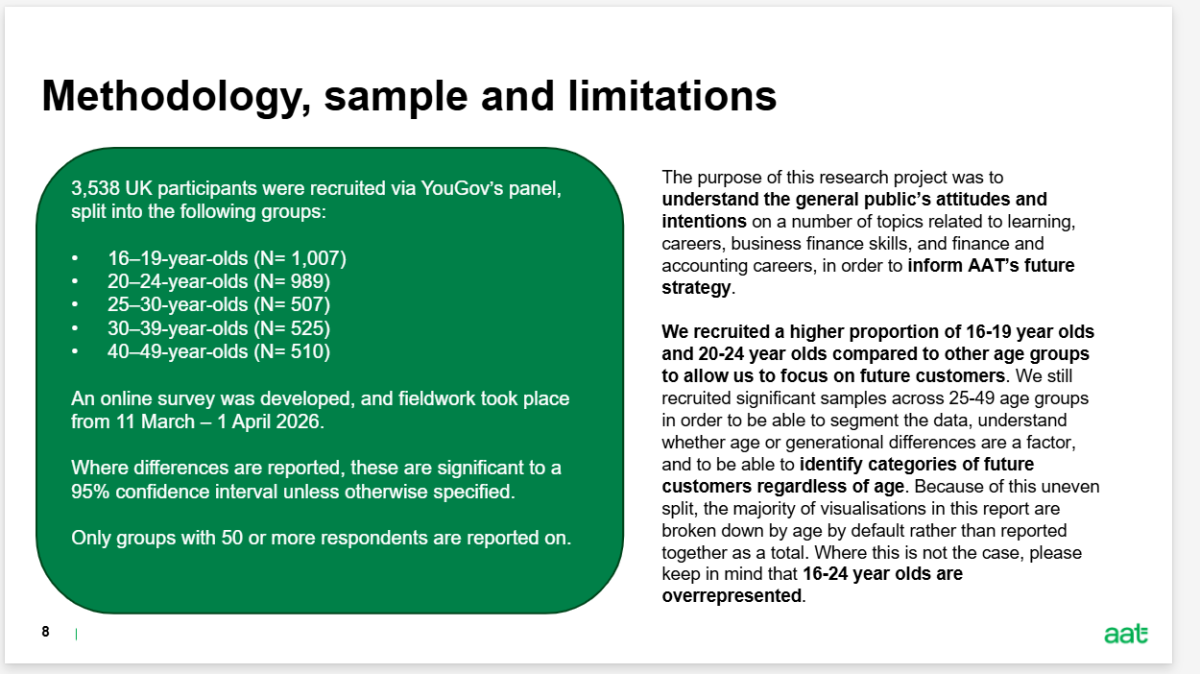
University is no longer the default path to professional employment. We need genuine parity of esteem between academic and vocational routes, recognising that different pathways can lead to equally successful careers. This is backed up by research AAT commissioned with YouGov: 65% think apprenticeships are important for a successful career, compared to 59% thinking university is relevant. But achieving this means moving beyond the misconception that vocational training is only for hard hats and building sites. Apprenticeships of all kinds deserves equal recognition.
Crucially, our research found that improving job opportunities was the main learning motivation for the majority (57%) of young people aged 16-24. The aspiration to secure meaningful and secure work stands in stark contrast to achieving that, as the damning NEET figures illustrate. We need to match these ambitions with actual career prospects. At AAT, we constantly see people who didn’t follow a conventional university path, but who go on to build confidence, capability and gain rewarding careers through practical qualifications. That gives us a responsibility to challenge the idea that talent only counts when it arrives through one academic route.
Our research shows that employers are struggling to plug skills gaps, with 34% struggling to recruit for finance and accounting positions. We found that the vast majority of employers, 78%, face at least some skills gaps. Vocational routes and apprenticeships can deliver the skills employers need to fill those gaps while creating rewarding opportunities for young people. We’re best able to tackle the NEET crisis by ensuring young people have the skills to meet demand while being ready for the workplace.
We need to do better for young people
Policymakers, professional bodies and employers all have a role to play in helping young people find paths into rewarding careers. If we’re serious about addressing the rising NEET challenge while plugging skills gaps, we must make alternative pathways more visible and given genuine parity with university routes.
Young people need careers advice that reflects the full range of opportunities available such as meaningful work experience and clearer routes into work. Take the story of Savannah Daley, one of our students who began her accountancy journey with us in 2025. A year later, she’s now rapidly progressing through her studies and gaining confidence each day. In her own words, she’s said: “I’m determined to become an accountant, and my apprenticeship is making that dream possible.” The countless stories like this prove just how impactful clear routes into careers can be.
We need to move beyond simply telling young people to be more employable and start building routes that are easier to see, easier to access and more closely connected to real jobs. That means employers offering meaningful entry-level opportunities, policymakers giving vocational and professional routes equal visibility with university, and organisations like AAT helping young people build the practical skills, confidence and credibility employers need. If we get this right, the prize is significant: fewer young people left outside education or work, stronger talent pipelines for employers, and a skills system that recognises potential wherever it starts.
By Claire Bennison, AAT Executive Director of Customer, Partnerships and Innovation