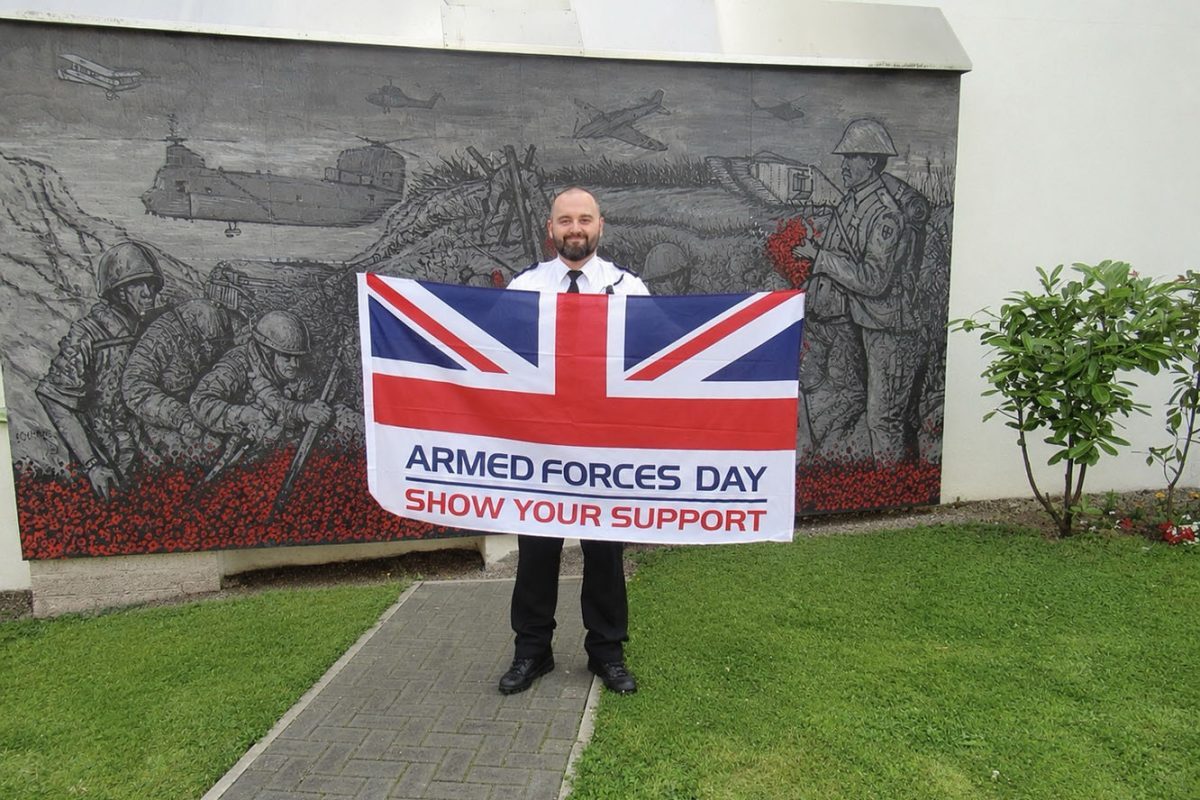
A military veteran is using his research undertaken at the University of Sunderland to strengthen his ability to support ex-service personnel in prison.
For Dave McCormack, studying for a Certificate of Higher Education in Health at the University has been an opportunity to build on his military experience and develop a deeper understanding of the veterans he supports in his work at HMP Perth in Scotland.
As a military veteran and serving Army Reservist who has deployed on operations, including Operation Herrick, Dave brought considerable personal experience to his research. However, exploring the evidence surrounding veterans in custody gave him a new perspective on the challenges some face.
Dave, 37, who is originally from Arbroath in Scotland and now lives in Dundee, said:
“I believed I already possessed a reasonable understanding of the challenges faced by veteran prisoners.
“However, undertaking this research provided a deeper and more evidence-based perspective, enabling me to better appreciate the complexity of these issues and the cumulative effects of trauma across different stages of life.”
His project examined the interconnected challenges that can affect veterans’ health and wellbeing, including post-traumatic stress disorder (PTSD), depression, substance misuse, adverse childhood experiences and trauma associated with military service.
Understanding how these experiences can overlap is important for professionals supporting veterans in custody. Dave’s research highlighted the value of trauma-informed approaches and coordinated support between prison staff, healthcare professionals and partner agencies.
A key part of the project was learning to assess the quality and reliability of research. Drawing on academic databases, government publications, policy documents and reports from criminal justice practitioners, Dave used the CRAAP Test, assessing Currency, Relevance, Authority, Accuracy and Purpose, to evaluate his sources.
“The ability to locate, assess and synthesise information from a variety of credible sources enabled me to produce evidence-based work and confidently present findings to a large professional audience,” Dave explained.
For Dave, these are skills with a direct connection to his role as a Veterans in Custody Support Officer (ViCSO) at HMP Perth. Combining frontline experience with a stronger evidence base can help inform professional discussions about veterans’ needs and the support available to them, both in custody and as they prepare to return to their communities.
The University’s Certificate of Higher Education in Health is designed for serving military personnel, veterans and their families. Delivered entirely online, the course builds on learners’ existing experience while developing skills in research, critical thinking and health-related practice.
One of the most significant outcomes for Dave was the opportunity to present his research to more than 300 delegates at this year’s HMPPS and Veterans in Custody Awards Event, held at the National Conference Centre in Birmingham.
Reflecting on the impact of his studies, Dave said:
“Overall the Health Project module has strengthened my research, analytical and presentation skills while enhancing my professional practice as a VICSO.”
He added that the knowledge gained had enabled him
“to contribute more effectively to the support of veterans in custody and to promote evidence-based approaches that improve outcomes for this population.”
Garry Heeson, Senior Lecturer in Military Education at the University of Sunderland and Programme Lead said:
“Dave exemplifies the purpose of the Certificate of Higher Education in Health, which is to enable learners to critically engage with evidence and apply it meaningfully within their own professional contexts.
“Throughout his studies, Dave demonstrated a genuine commitment to understanding the complex health and wellbeing challenges faced by veterans in custody.
“By combining his lived military experience with research, critical appraisal and evidence-based practice skills developed through the programme, he has been able to influence and enhance support for a vulnerable population.
“His work is an excellent example of how higher education can empower students to translate academic learning into tangible improvements in practice, ultimately benefiting both individuals and the wider organisations they serve.”