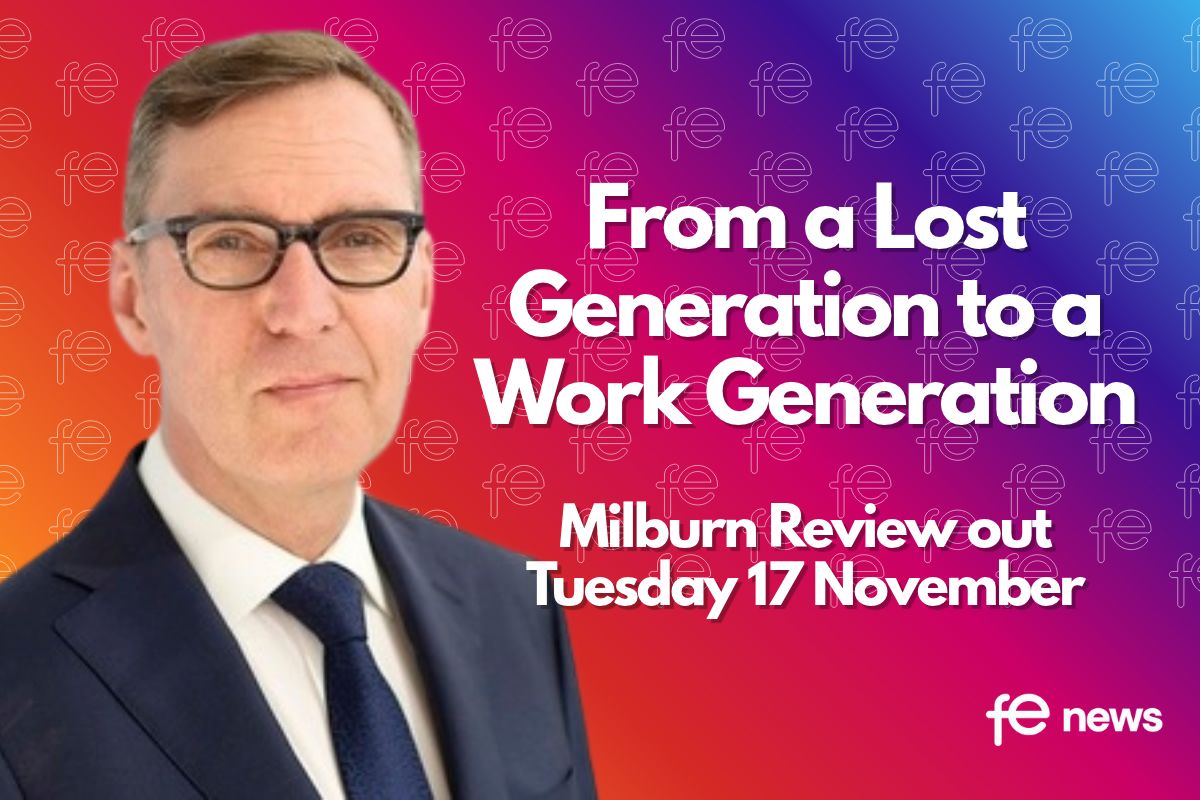
- Alan Milburn’s final report is a blueprint for ending Britain’s NEET crisis and a complete rewrite of how public services support young people.
- A national ambition to take the NEET rate from 13% to around 5% by 2036, making the UK one of Europe’s best performers on youth participation.
- A new Youth Opportunity Service in every part of England, backed by new legal entitlements, so that every NEET young person has a route back.
Alan Milburn will tomorrow publish ‘From a Welfare State to a Working State: A new settlement for the next generation’, setting out a bold new deal between young people and the state.
Milburn says the report is a choice moment for the country and sets a ten-year ambition to end long term youth unemployment and ensure every young person has the chance to earn or learn.
At its heart is a new local Youth Opportunity Service (YOS), the “engine room of a Working State”. It would bring together employment, careers, health and practical support around a young person, with a personalised participation plan and a named adviser.
Two new guarantees in law would underpin it. An Opportunity Guarantee would give a route into education, training or work. A Support Guarantee would give the health, employment and practical help to take it up.
Nearly one million young people, one in eight, are not in education, employment or training. Six in ten have never had a job. Across Europe, only Romania had a higher NEET rate than the UK in 2025. On current policy the rate could reach 16.3%, around 1.27 million young people, by 2031. Youth disengagement already costs the country about £125 billion a year.
“Britain has had a youth NEET problem for 25 years and never a plan to end it.
“We are at a fork in the road and half measures will not do. A complete system reset is needed.
“A lost generation is not inevitable. A work generation is possible.
“This is not simply a cause for young people. It is a cause for the country. We have to make the next generation a national priority. Youth participation has to run through public policy like a stick of rock.”
The report proposes reforms across government and public services:
- Early years and schools: more support for parents, a school-ready target of 90% of children by age five and a curriculum rebalanced towards the skills young people need for work.
- Colleges and apprenticeships: a doubling of the number of young people achieving an apprenticeship over the decade, so that apprenticeships rival university as a mainstream route for school leavers.
- instant access to needs-based mental health support without waiting for a diagnosis and fast-track help for young people who are NEET.
- a new benefits system for under-25s that moves from writing a cheque to creating an opportunity, backed by major new investment in support, training and jobs before any benefit changes.
- a new bargain in which employers create more first chances and government makes it cheaper, simpler and less risky to hire a young person.
- Whole system: a statutory Youth Opportunity Test so that major tax, spending and regulatory decisions are assessed on their effect on the next generation before they are made.
Milburn is clear that crude benefit cuts will not work and that reform will need upfront investment. Savings start early and build over the decade.
For every £25 spent on youth benefits only £1 went on helping young people into work or education
In 2024 to 2025, for every £25 spent on youth benefits only £1 went on helping young people into work or education. The report aims to rebalance that to £2 to £1, amongst the best in Europe.
The reforms are also expected to help around 440,000 young people into work by 2036 and reduce relative poverty after housing costs by 50,000 people.
The report argues that the NEET crisis is a choice and that other countries have made a different one. The Netherlands has a NEET rate of 4.8%
At a press conference on Tuesday, Alan Milburn is expected to say:
“A lost generation is not a fact of life. It is a choice. And I believe it is the wrong one.
“Not just because it is a fiscal crisis or an economic crisis. But because it is a moral one.
“We are failing as a nation to gift the next generation the opportunities they need to succeed.
“It is time for a new settlement that makes work not welfare the future for the next generation.
“Demographic change makes getting young people into work a necessity. Britain’s future relies on us backing young people.”
Steve Rotheram, Mayor of the Liverpool City Region said:
“We’ve got a system that’s too quick to tell young people what they can’t do, and nowhere near good enough at helping them achieve what they can. Alan Milburn is right to challenge that. Nearly a million young people are currently out of education, employment, or training. That’s an enormous waste of talent and potential, and we should be much more ambitious about changing it.
“What I particularly welcome is the recognition that the answers won’t all come from Whitehall. Giving mayors the powers and resources to bring together skills, employment and health support is exactly the sort of joined up thinking we need. We know our communities and the barriers people face. There’s no shortage of talent or ambition among young people in places like the Liverpool City Region. Our job is to make sure there’s no shortage of opportunity either.”
Shevaun Haviland, Director General of the British Chambers of Commerce said:
“The challenge of getting hundreds of thousands more young people into work is massive and the Milburn Review does not shirk from that. Having almost a million young adults outside education, employment or training is a huge waste of talent that we simply cannot afford. They are the workforce of the future.
“Businesses want to give young people opportunities. But too often they are arriving in the jobs market with little workplace experience, while the costs and risks of taking them on continue to rise.”
Jon Sparkes OBE, Chief Executive of Mencap said:
“This is a once-in-a-generation opportunity to back young people and invest in them so they can realise their potential. We know young people with a learning disability want to work, but the system fails to provide them with the opportunity and tailored support to do so.
“Both the Opportunity and Employment Guarantees recommended in this review will make a real difference, as will joined up support with health and education services. Alongside this, we need a strong, secure safety net for those who need it, so that young people with a learning disability are not disadvantaged. We look forward to working with government to get the detail right, so that the experience and views of young people with a learning disability shape what happens next.”
Allen Simpson, Chief Executive of UK Hospitality said:
“This is a rightly ambitious plan to solve the NEETs crisis. Hospitality, as the largest employer of young people in the economy, stands ready to provide young people with the job opportunities they need to be part of the work generation. I’ve been delighted to have worked closely with the review team, and I look forward to working with the Government on taking these plans forward.”
Tracy Brabin, Mayor of West Yorkshire said:
“Young people are not the problem. More than eight in ten of those who are out of work or education want a job or training. With a Youth Opportunity Service in every area – designed and run locally – we will give young people who need help one place to turn and someone to fight their corner.
“Our West Yorkshire Promise is a commitment of work experience for every young person, and with deeper devolution, we’ll widen that to guarantee a good route into work.”
Tina McKenzie, National Chair of the Federation of Small Businesses (FSB), said:
“Helping one million small employers, based in all our local communities, to afford to create roles is the only way to make significant inroads into having one million young people not in employment, education, or training. Increasing young entrepreneurship through self-employment is going to be fundamental too – many young people want to set up on their own, and not have to work for someone else, and that route is vital for social mobility.
“The Government was right to make this a national priority and appoint Alan Milburn. We are pleased to see his report published and we call on Ministers to take up the action needed to help employers and those looking for work.
“Bringing forward support for young people who have been economically inactive for too long and giving them a genuine chance to gain experience and build confidence, is an important step and small businesses are well placed as long as public policy decisions now flow from the review.”
Andy Haldane CBE, Chief Executive of the Royal Society of Arts said:
“There is no more pressing challenge – economically, societally, morally – than reducing the young person’s NEET problem in the UK. Alan Milburn’s report provides the blueprint for doing so. It is now for Government to summon the resources and political will to deliver on that blueprint.”
Justine Roberts, Mumsnet founder, said:
“Every parent wants to give their child the best possible start in life, but it’s not always easy to know how. The scale of the conversation on Mumsnet about young people struggling to find work or stay in education underlines just how widespread this problem is. We frequently hear from parents who are worried about their children’s futures, unsure how best to help them and left to navigate a complicated system with very little support. This is a huge challenge for families and for the country, and it’s good to see it getting the attention and urgency it deserves.
“We’re particularly pleased to see the Review recognise the important role parents play in helping young people find their way into education, training and employment, and the need to support them in doing so. Not every family has the same time, money, or connections to help their children get ahead. Giving parents better information and practical support could make a real difference, helping to ensure that young people’s opportunities don’t depend quite so much on how well their families know the system.”
Ruth Owen, CEO of Leonard Cheshire said:
“Young disabled people have no shortage of talent or ambition. What they need is a society that matches that ambition with opportunity. With the right support, more young disabled people can learn, earn, live independently, and fulfil their potential. That requires action across employment, education, health, and social care. Government, employers, and public services must work together with young disabled people to remove the barriers still holding them back.”
Helen Dickinson, Chief Executive of the British Retail Consortium said:
“Milburn rightly recognises the critical role retail can play in tackling the youth crisis and the need to reduce the cost of entry level jobs for young people. Retail provides accessible routes into work and the skills to progress. With a million young people not earning or learning, the need for action has never been greater. Retailers are playing their part through a new national retail work experience programme, Opening Shift, helping NEETs break the ‘no experience, no job’ cycle. But experience is not enough if there is no job at the end of it. Government must head Milburn’s call and make it easier for businesses to hire, train, and invest in the next generation.”
Sir Charlie Mayfield, Chair of the Keep Britain Working review said:
“Alan’s ambition is a breath of fresh air. The routes young people take into work have not kept pace with a changing workplace, and for too long that has been ignored or seen as too difficult. Some find their way. Too many don’t, often with lifelong consequences. Government must set the direction and configure the system. But employers have to step up too. We were all young once, and we can open more first doors for young people who don’t have the connections to find them.”
Lynn Perry, Chief Executive of Barnardo’s said:
“Across the UK, a million young people are being denied the opportunity to fulfil their potential. This week must mark a watershed moment, where as a society we commit to a better future for this generation. At Barnardo’s, we support thousands of young people who are determined to learn, to work and to build a brighter future, and we see first-hand the obstacles standing in their way. Some are spending months or years on a waiting list for mental health services, while others can’t afford the basics like bus fare or interview clothes.
“The Prime Minister is right to say we need a new approach to supporting childhood, acting early so children don’t fall through the cracks. For those already entering adulthood, we warmly welcome proposals to invest in employment support and to guarantee everyone has the chance to earn or learn.”
Brian Dow, Chief Executive of Mental Health UK said:
“Young people want to work, but too many are locked out of opportunities because of poor mental health. The status quo is unsustainable. The challenges facing young people are deep-rooted and systemic, which is why we welcome this bold and radical plan to tackle the barriers holding them back.
“The review’s emphasis on early, personalised and joined-up support is essential if more young people are to participate in education, training, and employment. It will be vital that support remains at the heart of the system, and we need to protect young people who, with the best support in the world, will be too unwell to work.
“This is a challenge that requires a societal response. We need to rally around this plan so that young people can overcome the barriers they face, fulfil their potential, and build a more hopeful future.”
Children’s Commissioner for England, Dame Rachel de Souza said:
“I’ve heard from over a million children through my Big Future survey and tour. Their message is loud and clear: we are ambitious and we want to work. But young people hit a brick wall of endless applications and automated rejections; they want vocational opportunities, work experience, and support to thrive in an uncertain future.
“Children don’t think politicians listen to them – this review is a chance to change that. I welcome a radically new approach – but delivery will be key. The government must tackle barriers early, with a renewed focus on school and college attendance, rather than waiting until young people become disconnected from education and employment. That means it is essential that young people and families are given the right specialist support at the right time.”
Sharon Doherty, Chief People and Places Officer for Lloyds Banking Group said:
“We welcome the review’s ambition to give more young people the opportunities they need to succeed. Young people can’t take opportunities that aren’t there. Employers have a responsibility to open doors, create genuine first steps into work, and help young people build the skills and confidence to succeed. There’s much more to do, but giving young people a fair chance to build their future is something businesses can and should play a practical part in.”
Gavin Kelly, Chief Executive of the Nuffield Foundation said:
“For the last forty years there has been wave after wave of short-term initiatives to support young people into the world of work, resulting in a patchwork of programmes and fragmented institutions. We desperately need to move to a lasting and integrated system of locally led support that will help young people to participate in learning or earning – and this landmark Report paves the way to it.
“This will inevitably require significant upfront investment. We have a neglected generation that needs backing, employers that need support and local capability that needs to be built. But the long-term benefits – for young people, the economy and wider society – will far outweigh these costs. The most expensive course of action right now would be to stick with the failing status quo.”
Dr. Rachel Perkins OBE, Clinical psychologist said:
“This report is important for young people not in employment, education, or training – and for our country which is deprived of all their talents and contributions. Many have grown up in poverty, often with challenges like caring responsibilities and neurodiversity, and have been labelled as failures by an education system focused purely on academic achievement. Is it any wonder so many experience anxiety and depression? Yet if they receive mental health support, they experience a system focused on diagnosis and alleviating symptoms with little heed to the life experiences that caused their problems in the first place. The 2025 Community Mental Health Survey shows that, of those who said they needed help and support to find or keep work, 67% did not get this help (Care Quality Commission, 2026). It does not have to be this way – this report shows us a way forward, we must take it.”
“The Milburn Review marks a defining turning point in how we understand and respond to the challenges facing a generation of young people. Over the past year, I have had the privilege of listening to hundreds of young people across the UK and what we found was a generation full of ambition and potential, facing too many snakes and not enough ladders.
“This Review has helped shift the national conversation away from blaming young people towards recognising the systems and barriers holding them back. Its recommendations offer a real opportunity to transform how we support young people, invest in their futures, and give them the opportunities they deserve. I hope this Review will be remembered not just for the reforms it inspires, but for the young lives it changes and the hope it restores.”
Laura-Jane Rawlings MBE, CEO of Youth Employment UK said:
“This is a landmark moment for youth employment. For too long, we have relied on disconnected programmes to tackle a challenge that needs a whole-system response. We welcome the ambition for a Youth Opportunity Service in every area, backed by legal guarantees, earlier support, and a stronger commitment to helping employers create good-quality opportunities.
“As the national body for youth employment, we have long called for a system that brings young people, employers, and local partners together. These recommendations offer a real opportunity to achieve that. We stand ready to work with government and partners across the country to turn this ambition into good work and lasting progression for young people.”
Dr Jennifer Dixon DBE, Chief Executive of the Health Foundation said:
“A million 16–24-year-olds out of work or education means a million young lives at risk of persistent disadvantage, worsening health and lost opportunities. Today’s report rightly recognises that tackling the health barriers holding young people back must be at the heart of the response. Alongside Professor Peter Fonagy’s review last month, it sets out the foundations of a system that helps young people get support early, before problems escalate, rather than forcing them to wait until crisis point.”
David Hughes CBE, Chief Executive of the Association of Colleges said:
“Alan and his team have done a great job shining a light on the moral and economic disaster of having nearly one million people not learning or earning. With the right investment and collaboration at national and local levels over the coming years, it is clear that hundreds of thousands more children and young people will be able to get the support they need.
“As the report makes clear, in every country with a better system for supporting young people and with lower NEET numbers, colleges have a bigger role from 14 years of age. In this country, colleges are ready to step up and inspire more 14 and 15-year-olds, enrol more 16 to 19-year-olds and provide the training and skills that young people need to find good work. The recommendations should help colleges to work with partners locally to reduce NEET numbers considerably over the next 10 years. What we need now is for every leader of colleges, schools, universities, local government, health trusts to step in and work together. With the investment and the will, we can develop a new culture as well as a new system which means no young people are left behind, none can drop out and more can realise their talents and aspirations by finding good jobs.”
Ravi Gurumurthy, Chief Executive of Nesta said:
“Alan Milburn is right to recognise that the path to becoming NEET begins long before a young person leaves school. If we are serious about helping every child grow into an independent, thriving adult, we have to back them at every key milestone – from getting the basics right in the earliest years, through school, right up to post-16 study and training.
“Up until now, no single body carried clear responsibility for bringing down NEET rates or held the authority to join up the health, education and employment support an individual needs. This review is an opportunity for the government to ensure nobody slips through the cracks, with a joined-up service that champions young people’s needs beyond childhood.”
Jonathan Townsend, UK Chief Executive at The King’s Trust, said:
“The ambition to reduce the UK’s NEET rate to around 5% is a bold and welcome commitment that could help transform the prospects of hundreds of thousands of young people. We know from our own work with young people that there is no single route to success. What matters is ensuring every young person can access the right support, at the right time, in a way that works for them.
“Today’s proposals share our belief that every young person should have that opportunity to build a successful future through work, education or training.”
Tom Arey, Director at PfP Thrive, said:
“Almost one million young people are not earning or learning, and behind every one of those numbers is someone with potential. Whatever the final shape of the reforms, the test will be whether there are real jobs and training at the end of them. Without those opportunities, there are real consequences. For our sector, that means fewer homes being built or repairs going unfinished.
“Reducing the cost of employing young people, something we have long called for, is a positive step. Employers need the right incentives to create those opportunities and help more young people into work.”
Jack Kennedy, Senior Economist at Indeed, said:
“The Milburn review is an opportunity to focus attention on the barriers young people face in getting a foothold in the labour market. Those barriers are not all the same, and support needs to reflect the different circumstances of young people looking for a route into work, education or training.
“Indeed data shows how challenging the starting point can be, especially for apprenticeships. Between August and October, apprenticeship job postings were 36% lower than a year earlier, a far steeper fall than the 10% drop across overall postings. They are now around two-thirds below their 2019 level and make up just 0.7% of job postings. For a route designed to help young people learn on the job, that is a significant narrowing of opportunity.
“Helping more young people into work would deliver wider economic benefits, bringing more talent into the workforce and helping employers build the skills they need for the future. But support for jobseekers only goes so far if businesses aren’t hiring, which is why reducing the cost burden is important. The test will be whether the response helps young people prepare for work while creating more opportunities for them to get that first step on the career ladder.”
Michelle Leeson, Managing Director for Employment, Justice, and Health at the Growth Company, said:
“The Milburn Review rightly recognises that young people need more than just access to vacancies. They need local, tailored support that helps them gain real on-the-job experience and navigate what can often be a complicated employment and skills system and challenging labour market.
“We also welcome the review’s recommendation to expand flexi-job opportunities for disabled young people. Flexible, accessible routes into work can help remove barriers, open up new opportunities, and make sure young people are able to fulfil their potential and move into long-term employment.”
Kate Ambrosi, Chief Executive of the Baker Dearing Educational Trust, said:
“The Milburn Review has shone a light on the urgent need to tackle the growing number of young people who are not in education, employment or training. If we are serious about reducing the NEET rate and improving social mobility, we must place equal value on work readiness, technical skills and progression into high-quality careers alongside traditional academic attainment.
“We are thrilled the review highlights the UTC model as one of the most effective approaches currently operating in pre-16 education.
“It is clear policymakers should expand proven models like University Technical Colleges that connect young people directly to opportunity, apprenticeships and economic growth.
“Today, 45 UTCs and two UTC Sleeves benefit from employer-led projects, industry-standard facilities, meaningful workplace experiences and a curriculum designed, with employers, around current and future skills demand. UTC students consistently progress to sustained destinations: each year, a fifth of our Year 13 leavers progress to apprenticeships, around three times more than the national average. Fewer of our leavers immediately become NEET as well.
“The challenge identified by Alan Milburn is significant in its scale, but so is the opportunity. We already have clear evidence that technical education, delivered in close partnership with employers, changes lives. The task now is to apply those lessons at scale.”
Paul Whiteman, general secretary at school leaders’ union NAHT, said:
“It is positive that this review has recognised that issues which lead to young people disengaging in education, training and work do not appear overnight. The factors which can place children at risk often emerge much earlier and require support long before they reach the point of leaving school.
“Helping children thrive starts well before children enter the classroom, and schools alone cannot address the social, economic and health challenges that can affect attendance, engagement and achievement. It is therefore encouraging to see a recognition that improving outcomes for young people requires coordinated action across government and public services.
“Setting children on the right path starts in the earliest years. The experiences, routines and learning children develop at home, in early years settings and throughout primary school, lay the foundations for their confidence, wellbeing and future success.
“Since the pandemic, school leaders have noticed increasing issues with children’s school readiness, including around speech and language development, and the aim of addressing this is welcome. NAHT has been vocal on the need for more investment in tackling challenges facing families and their children so they do not harm young people’s ability to attend and flourish in school, and the review’s call for more support for parents should be heeded.
“We welcome the recognition that young people should have an education system which prepares them not only for exams, but for adult life, further study and employment. NAHT has long supported a broad and balanced curriculum, alongside greater parity of esteem between academic, vocational and technical pathways, so that every young person can pursue a route that reflects their talents, strengths and aspirations. The government’s plans to offer greater choice when it comes to vocational and technical education, and truly recognise their value, will be vital in helping to create high-quality pathways for young people.
“The proposed Youth Opportunity Service could play an important role in bringing together support across education, employment, health and wider services, but it must provide additional capacity and coordination, rather than simply creating new expectations or responsibilities for schools.
“As ministers consider the recommendations in this review, they must ensure that schools and colleges have the time, capacity and funding needed to deliver change successfully, especially given the sheer amount of reform they are already contending with. Any new expectations must be matched by the support necessary to make them achievable.”
Jude Hillary, Co-Head of Policy and Practice at NFER, said:
“We welcome this review and its ambition of reducing NEETs to 5% by 2036. Its focus on improving employment prospects for young people is encouraging, but helping more young people to get into work is only part of the challenge. The move from education into employment is part of a longer journey, with young people’s early careers shaped by the opportunities available to them and the decisions and transitions they make along the way. Success should be measured not simply by how many young people enter work, but whether they stay in employment, develop their skills and progress in their careers.
“Education and training play a central role in shaping these journeys. The routes young people take into work are changing, influenced by shifts in what employers need and the education and training opportunities available to them. We need a better understanding of which routes are working well, where young people face barriers and which groups are most affected.
“The creation of a Youth Opportunity Service (YOS), bringing together employment, health and practical support around a young person, with a named adviser, seems like a positive first step and we look forward to hearing more details on this.”
Milburn Review a “once-in-a-generation chance” on youth unemployment, but only if government commits to real employer partnership, says CIPD. Neil Carberry, chief executive of the CIPD, the professional body for HR and people development, said:
“This review is a once-in-a-generation chance to turn the tide on youth unemployment, and Alan Milburn and his team deserve thanks for it. But the government will only seize the moment if it backs ambition with genuine partnership with employers and joined-up policy. Too often, decisions are made in silos and leave employers struggling and young people out of work.
“Engaging employers is key, and it’s good to see Alan Milburn gets that. When hiring is too expensive and risky, employers simply won’t take on the people they need, and young people have borne the brunt of this. That can’t continue. The report’s focus on building a more effective and targeted skills system, with local leadership and a place for FE, is right. Firms will understand the wish to pivot the apprenticeship system to younger workers too. Though these changes will come at a cost to some employers, most will view the plan as a package.
“This package of reform must signal a fundamental reset in the government’s relationship with business. Milburn’s plan to double the National Insurance threshold for 21-24-year-olds to £10,000 is a welcome recognition that rising employment costs have made hiring harder, and we would encourage the government to follow it.
“The government can further show it’s taking a new approach by making sensible compromises on its zero hours contract reforms, so they don’t threaten the flexible jobs that give many young people their first experience of paid work.
“Getting to solutions that are pro-worker and pro-business will be key. The CIPD is ready to step up and play our part in building more and better pathways into work for young people.”
Responding to Alan Milburn’s report calling for a “complete system reset” to tackle youth unemployment, Liberal Democrat Leader Ed Davey MP said:
“Successive governments have allowed a generation to fall through the cracks. Nearly a million young people are now out of work or training, which is more than there are job vacancies in the entire country. ‘Work not welfare’ means nothing when the work simply isn’t there.
“If ministers want to halve the number of NEETs by 2036, they need a plan for growth. That means scrapping Labour’s jobs tax, joining the EU single market and cutting the cost of doing business, so firms can afford to hire young people again. No target or guarantee can conjure up jobs that don’t exist.
“The warning signs are there long before a young person leaves school. Our plan would shut off the NEETs pipeline at source, with 100 hours of real work experience before 18 and a careers coach for every young person.”