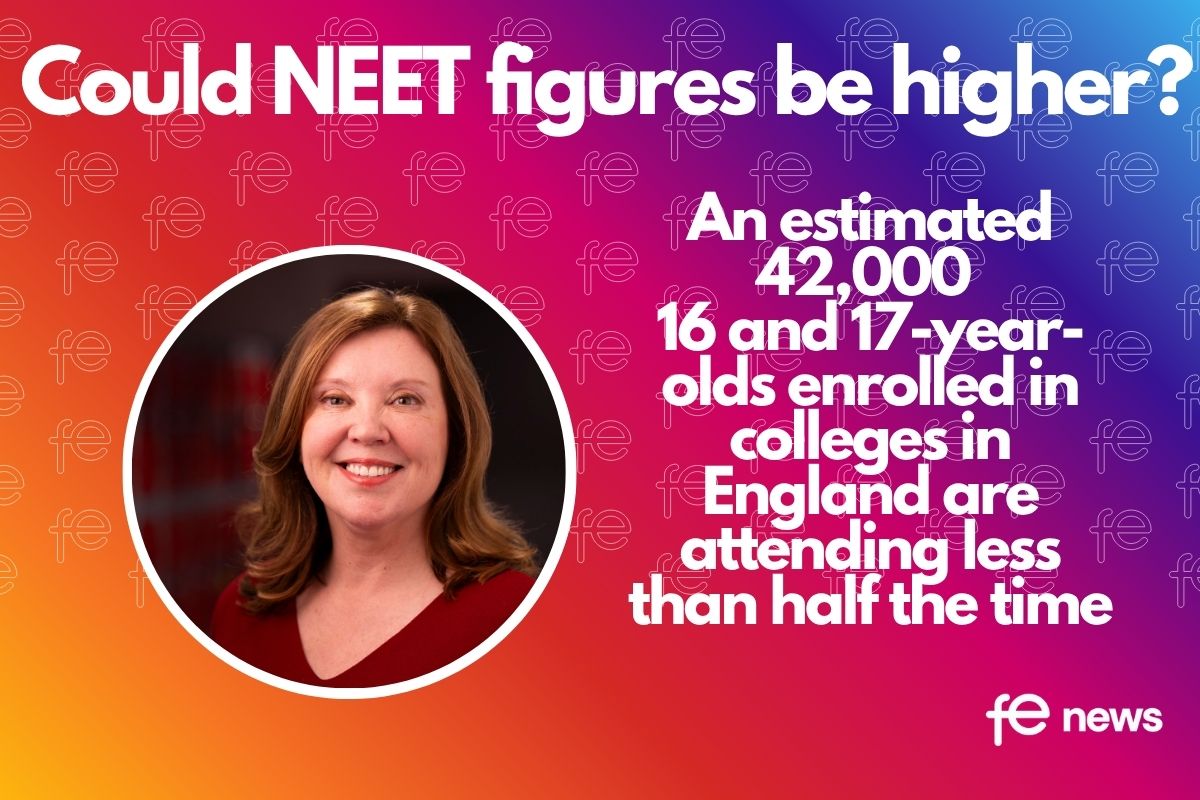
Thousands of teenagers slipping through the cracks, as 42,000 ‘hidden NEETs’ remain enrolled in colleges but are severely absent from learning
- An estimated 42,000 16 and 17-year-olds are enrolled in colleges but attending less than half the time, meaning they are effectively disengaged from education but remain outside official NEET figures
- True scale of young NEETs could be almost twice as large as official figures suggest, with the 42,000 severely absent college students adding to the 47,000 16 and 17-year-olds already known to be NEET
- Children’s Commissioner calls for attendance data to be consistently captured, greater mental health and wraparound support and better links between education and employment
Tens of thousands of 16 and 17-year-olds enrolled in further education settings are severely absent and attending learning less than half the time – meaning they are disengaged from education but remain invisible to official NEET figures, the Children’s Commissioner has warned.
An estimated 42,000 16 and 17-year-olds are enrolled in colleges, but attending less than half the time, meaning they are effectively disengaged from education, but remain outside official NEET figures
Dame Rachel de Souza’s new analysis suggests the number of young people not in education, employment or training (NEET) is likely to be much higher than in official statistics, with an estimated 42,000 16 and 17-year-olds enrolled in colleges in England but attending less than half the time.
When these young people are considered alongside the 46,520 16 and 17-year-olds already known to be NEET, the number of disengaged young people is almost twice as large as official figures indicate.
With the Government committed to helping more young people find work and the second part of Alan Milburn’s review into NEETs coming, the Commissioner has put the spotlight on attendance at Further Education (FE) settings.
The report highlights that in England, 40.9% of young people aged 16 and 17 attend an FE or sixth form college. Despite this being a significant percentage of young people, attendance data is ‘patchy and poorly’ collected.
FE settings are not required to report to the Department for Education on attendance like schools, and so Dame Rachel’s attendance data, obtained using her statutory powers from 262 of England’s 290 college groups (more than 90 per cent of the sector) provides for the first-time a near-comprehensive picture of attendance data for FE settings.
Children’s Commissioner Dame Rachel de Souza said:
“I’ve heard from hundreds of thousands of children – they are ambitious, they want to do well, they want to work. Young people need a full, rich education that gives them the knowledge and skills to get on in life, but I have long argued too many children are missing out.
“My concern is that tens of thousands of children are currently being counted as ‘in education’ when, in reality, they are barely attending. We have a blind spot: hidden NEETs slipping through the cracks, young people with all the negative impacts of not being in employment, education or training but with none of the targeted interventions designed to help and support them.
“Further education is the crucial bridge between school and work, and that is why any solution to the NEETs crisis must address attendance must be built on urgently identifying and supporting young people before they disengage from education.”
28,528 16 and 17-year-olds missed half the sessions they were expected to attend
Today’s new data shows that 28,528 16 and 17-year-olds were severely absent from further education settings in Spring 2026, meaning they missed half the sessions they were expected to attend. Extrapolated across all college groups in England, this represents an estimated 41,995 students are missing half the sessions they were expected to attend.
Dame Rachel’s report also revealed that attendance challenges extended beyond this severely absent cohort:
- More than half of college students were persistently absent, with 52.2 per cent of 16 and 17-year-olds having an attendance below 90 per cent – the measure of persistence absence used in schools.
- Attendance in colleges was substantially lower than in schools, with the average reported attendance rate for 16-year-olds being 84.8 per cent and 83.4 per cent for 17-year-olds, compared to the 94.8 per cent attendance rate for pupils in primary school and 91.6 per cent attendance rate for pupils in secondary school in the same Spring term of 2026.
- Lower attendance for GCSE England and math resit courses, at 75.6 per cent and 74.4 per cent respectively. Failure to achieve Level 2 qualifications in English and maths is an important risk marker of becoming NEET.
- Severe absence varied considerably by student groups, with students receiving free school meals, those with an Education, Health and Care Plan (EHCP) and those looked after children all having higher absence rates than their peers.
Levels of ambition varied considerably between college groups. Nearly two-thirds (61.1 per cent) set attendance targets above 90 per cent, while almost a third (31.3 per cent) set attendance targets below this level – levels that would correspond to persistence absence in the school system. The remaining colleges (7.6 per cent) did not set attendance targets for their 16 and 17-year-olds.
Attendance Blind Spot in Tackling the NEET Crisis
Dame Rachel warned that young people who are technically “in education” but rarely attending risk becoming a blind spot in the government’s efforts to tackle the NEET crisis.
Colleges told the Commissioner that a host of barriers prevented young people from attending college, with concerns including mental health difficulties, poverty and financial hardship, transport problems, caring responsibilities, paid work and the transition from school to college, as well as previous negative experiences of education.
Despite these challenges, colleges shared examples of promising practice to improve attendance – for instance providing personalised support and working with families and external agencies – but said their efforts were hindered by funding pressures, a lack of statutory levers to support attendance and insufficient information sharing between schools and colleges about a student’s previous attendance.
Today’s report highlights the importance of identifying and supporting young people before they disengage completely from education. To reduce the number of young people who are NEET greater attention must be paid not only to those who have already left education but those who remain enrolled yet are disengaged from it.
Dame Rachel has set out the following recommendations:
- Attendance data for 16 and 17-year-olds should be collected consistently across all state-funded education providers, with the Department for Education setting ambitious targets for further education in consultation with the sector, which Ofsted can use to inform their judgements.
- Greater support for young people facing barriers to attendance, including expediting the rollout of Mental Health Support Teams in post-16 settings and wraparound support for young people entering college.
- Better support for young people’s transition into work, with better work experience opportunities and giving Metro Mayors and Combined Authorities responsibility for coordinating employer engagement with schools and colleges.
- Extending free bus travel to all children to reduce transport barriers young people face getting to college, especially in rural communities.
Severe absence varied considerably between groups of students. For example, rates were
higher among students receiving free college meals (8.8% compared with 5.5% among those
not receiving them); those with an EHCP (9.7%, compared with 5.4% among those with no
identified SEND or EHCP); and those looked after (12.5% compared with 5.9% among those with
no social care involvement). There were particularly large differences by level of study, with far
higher rates of severe absence among Level 1 and Entry Level students (13.4%) compared with
Level 3 vocational/mixed students (3.4%) and Level 3 academic students (1.1%).
Overall attendance rates
- The attendance challenge extends well beyond the most severely absent students. Average
reported attendance rates were 84.8% for 16-year-olds and 83.4% for 17-year-olds. These
compare to the 94.8% overall attendance rate for pupils in Primary school and 91.6% for pupils
in secondary schools in the same Spring term of 2026. - Over half of college students are persistently absent by school standards. 52.2% of 16- and
17-year-olds included in the analysis were reported as having attendance below 90% – the
closest available proxy for persistent absence which is used in schools. - Reported attendance was particularly low for GCSE English and Maths resit courses, at
75.6% and 74.4% respectively. This is a cause for concern. Not achieving Level 2 qualifications
in English and Maths is a strong risk marker of a young person becoming NEET. Colleges
highlighted to the Commissioner the need for teaching that is high quality, and some colleges
referenced work on linking these qualifications to young people’s futures. - Reported attendance targets varied widely between college groups. Most (61.1%) reported
that they set attendance targets above 90%; almost one-third (31.3%) set targets below this
level. The are levels that would correspond to persistent absence in the school system; and 7.6% did
not have an overall target for their 16- and 17-year-olds at all. The range for the attendance rate
among 16 year olds was 67.2% to 98.7% and the range for 17 year olds was 64.9% to 97.4%
The report also captures the views and experiences of college staff and young people themselves.
“It’s like, they want experience for a part-time job, so I can’t get experience to get a job to get experience to get a job.” – Boy, 17, The Big Future national tour
“There’s not enough jobs. I know people who’ve gone to Uni, and now they’re back here, and they can’t get a job.” – Boy, 17, The Big Future national tour
“Make it easier for young people to get on to higher [education] courses without maths and English resits so that we can achieve our goals.” – Girl, 17, The Big Future survey
The fact that there isn’t a clear way of recording attendance at Post 16 is farcical.” – Assistant Principal
“The single biggest driver of non-attendance is mental health, particularly anxiety. Funded mental health support teams, equivalent to those being rolled out in secondary schools, should be extended to post-16 settings.” – Academy Systems Lead
“One prospective student with autism, anxiety and communication needs faces a journey of up to two hours each way to access his chosen construction programme. Transport barriers have already limited his ability to engage with transition activities, increasing the risk of disengagement before starting college.” – Director of Management Information Systems (MIS)
Cath Sezen, Director of Education Policy, Association of Colleges, said:
“Attendance is important; it correlates with student success. All colleges set high expectations and take attendance very seriously. Data is regularly monitored by class teachers and managers, and strategies are put in place to support good attendance habits.
“High levels of attendance are expected as part of learning agreements, however, we need to recognise the additional responsibilities, vulnerabilities and wellbeing/mental health challenges that many young people face. A report, commissioned by AoC, and published by Youth Employment UK, for example, found that it was disadvantaged students and those with additional needs who were more likely to face barriers to attendance, engagement, and access to the workplace. Colleges do so much for students, against all odds, but the growing strain on the FE system, as well as funding pressures is limiting colleges’ ability to provide tailored support, particularly for those who need it most.
“We have called time and time again for increased investment, better integration of support services and a stronger national strategy for employer engagement.
“We are keen to engage with the debate and we agree with many of the recommendations. A national definition, which works for colleges where there are different timetabling models, would be a helpful step forward. The college cohort is more disadvantaged and face more barriers to engagement, and therefore any targets need to reflect this.
“Transfer of information, such as data, between school and colleges at the age of 16 would help support all young people even more effectively from day one. We support the recommendation of a national entitlement of free transport for 16 to 19-year-olds. Public transport routes need to reflect travel to learn patterns, especially in more rural and coastal communities. We would also welcome further discussion on reform of English and maths to help motivate young people to engage with these essential subjects.”