Germany is embarking on a crucial election period this month, with three key state polls that could markedly change the political terrain and make life decidedly harder for the federal government under the chancellor, Friedrich Merz.
All eyes are on Saxony-Anhalt on Sunday, where about 1.7 million people are eligible to vote, followed by Mecklenburg-Vorpommern and Berlin on 20 September. In all three contests, the far-right, anti-immigrant Alternative für Deutschland (AfD) is expected to make strong gains.
What is the AfD and why is the Saxony-Anhalt vote so significant?
Founded in 2013 as an anti-euro force but later morphing into an anti-immigrant party, the AfD has harnessed and amplified the frustrations of voters aggrieved and vexed by economic stagnation, rising immigration and cultural shifts.
Latest polls have put it at around 40-42% in the state, placing its ambition to achieve its first absolute majority at state level within reach. Securing power in the state would mark a first for the far-right since the second world war.
This matters for the whole country. State governments in Germany are represented in the upper house of parliament, the Bundesrat, so have broad powers over education, culture and domestic security.
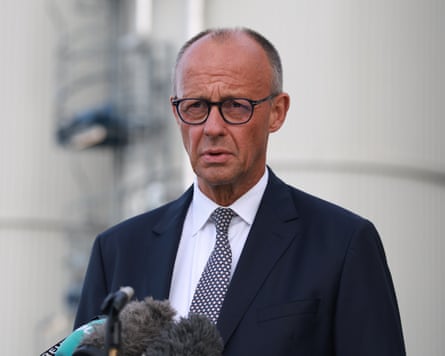
For the chancellor, the leader of the conservative Christian Democratic Union (CDU), an AfD takeover in the state could be the biggest disaster yet of a term already marked by seemingly relentless setbacks.
The AfD's leadership see their potential to gain power at state level as a natural springboard to electoral success at the next federal election in 2029. Currently the party is the main opposition in the Bundestag.
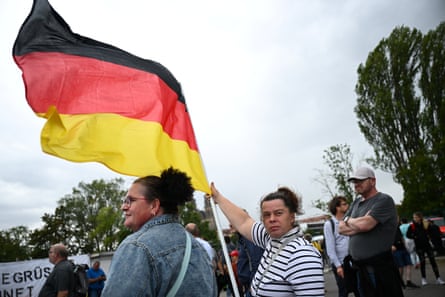
The populists' main obstacle is the stubborn resistance of other parties to collude with them, referred to as the or firewall. However, this approach would be null and void if the AfD wins an absolute majority.
What has the party said it plans to do if it gets into power in Saxony-Anhalt?
On it has vowed to start deporting "irregular migrants" from "the first minute" and to foster patriotism by replacing the state's current promotional slogan, "Think Modern", with "Think German".
Cultural offerings deemed anti-German would be subject to a clampdown and funding to public broadcasters it views as "leftwing propaganda lackeys" would be drastically cut.
In the sector, German flags would replace rainbow flags in schools, students would sing the national anthem, and the children of asylum seekers would be educated in separate classes.
Home schooling – long banned as a reaction to the Nazi era – would be allowed again, and the history curriculum would be changed to move away from what the AfD sees as an excessive focus on the Nazi era.
Russian teaching would be expanded and programmes focused on combating rightwing extremism would be axed.
On the , the party wants to ban windfarms. On , it wants to boost the German birthrate by introducing "welcome money" for couples who have children, reducing childcare costs, and offering free school meals.
On , it wants to push for widespread changes to the domestic intelligence agency, the BfV, which has classified the AfD's Saxony-Anhalt branch as rightwing extremist.
It also wants to introduce "citizens' watch" groups to assist the police in attempts to clamp down on leftwing extremism. Critics of the last proposal have compared the idea to the auxiliary police structures set up by the Nazis, which led to the creation of a police state.
Who is the face of the party in Saxony-Anhalt?
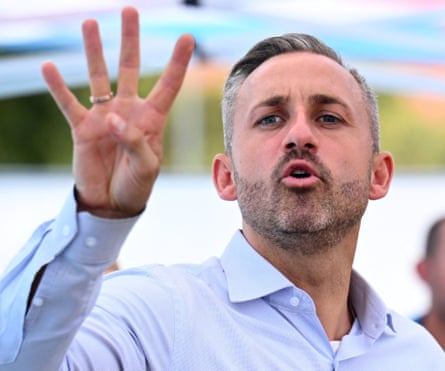
Ulrich Siegmund, the party's photogenic 36-year-old poster boy, has a considerable TikTok following and has been received like a pop star by supporters wherever he goes in the state, often travelling on a moped from East Germany's pre-unification era.
A former air freshener salesman with a degree in business psychology, he embodies a charm and wit that his party colleagues have often lacked.
When Der Spiegel magazine recently ran a front page story calling him Germany's most dangerous man, he gleefully signed the magazine at rallies.
What stands between the AfD and an absolute majority?
While a win for the AfD is now seen as a given, its prospects of winning an outright parliamentary majority are far from certain and, this being German election law, rather complicated.
A lot depends on whether smaller parties reach the 5% minimum needed to make it into parliament. If they fail, the AfD would need less than 50% to form a government. The CDU and other mainstream parties, like the Social Democrats and the Greens, have voiced their intention to form a coalition if they gain enough votes among them.
The CDU has repeatedly refused to coalesce with the AfD, and has also refused to work with the far-left Die Linke. However, it may well need Die Linke's support to form a minority government.
Die Linke would probably offer that, but mainly because it will not want to go down in history as the party that let the AfD come to power.